

What a tech pack is for
A tech pack is the document a manufacturer works from when it makes your sample and quotes your production. It replaces conversations like "make it like this one, but boxier" with drawings, measurements and materials that two people read the same way.
The first version may still have gaps. Identify them before sampling, agree on the development work needed, and record each revision so the next sample uses the same instructions.
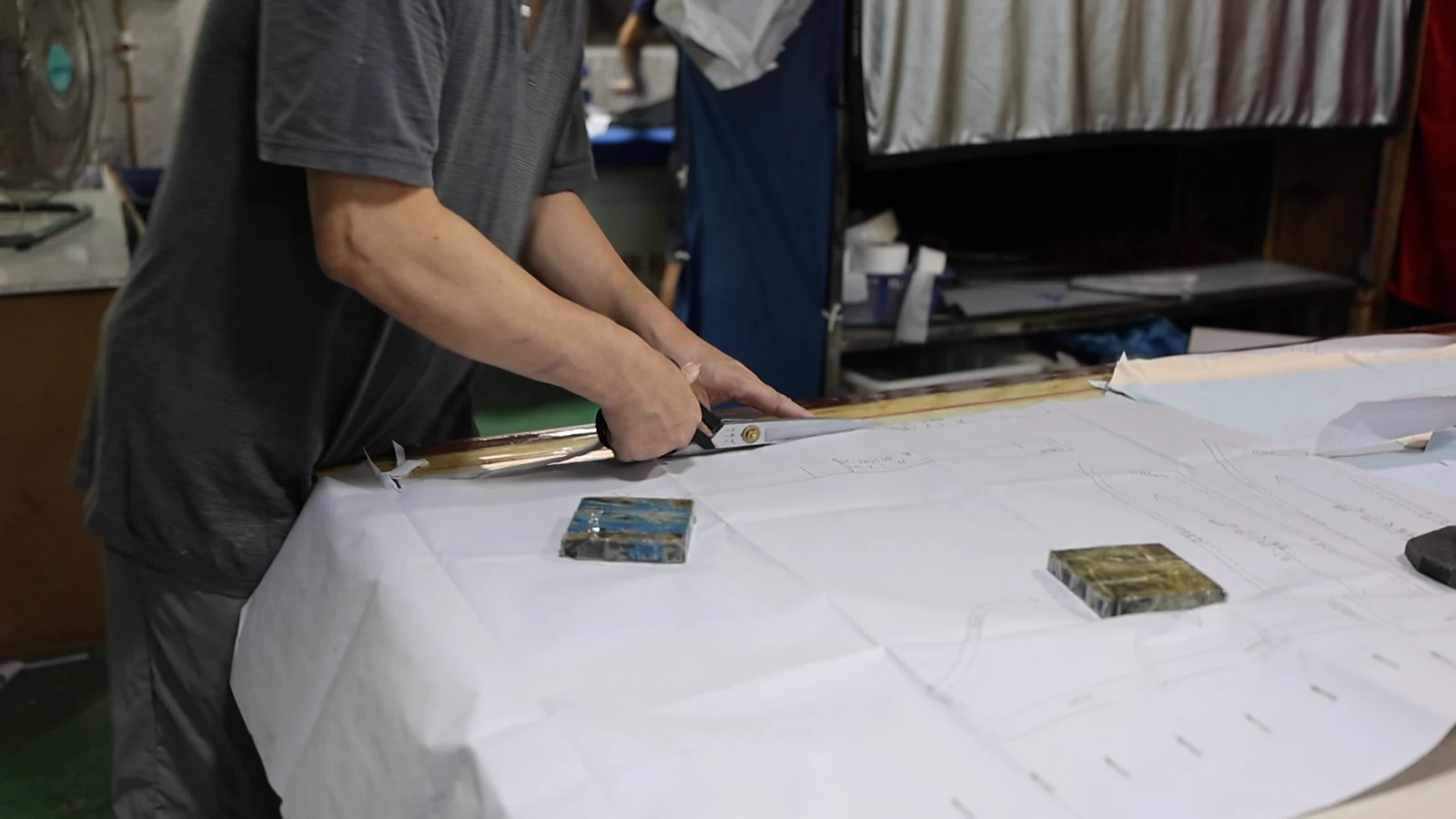
Flat sketches
Flat sketches are technical drawings of the garment laid flat, front and back, without a body or shading. They show seam lines, pocket placement, stitching, hems, ribbing and where graphics sit.
Construction callouts explain garment details. Add separate measurement diagrams with labeled start and end points for each point of measure.
- Draw front and back views; add a side or detail view for hoods, pockets or zips.
- Number your callouts and refer to the same numbers in the construction notes.
- Mark graphic placement with distances from fixed points, such as "8 cm below the collar seam".
Measurement chart
The measurement chart (or size spec) translates fit into garment dimensions. Identify the base size, units, measurement methods and specifications for the sizes you plan to produce. The examples below describe a pullover hoodie; agree on the endpoints and methods for your own garment.

Swipe the table to read all three columns.
| Point of measure | How it is measured | Note |
|---|---|---|
| Body length (HPS) | High point shoulder beside the neck to hem | Garment laid flat; show the front-length endpoints |
| Chest width | At the agreed level below the armhole, side to side | Half measurement; state the distance below the armhole |
| Sleeve length | Shoulder seam to cuff edge | Set-in sleeve example; define a separate method for raglan sleeves |
| Hem width | Edge to edge at the hem | Relaxed, not stretched |
| Hood height | Agreed hood base point to the top | Show both endpoints on the hood diagram |
Agree on the allowed variation for each measurement before sample approval and production. Record those tolerances, the garment condition when measured and the grading rules for the other sizes. If you start with a reference garment, confirm its measurements as the base rather than treating it as a finished size range. Carry the approved specification into your quality-check plan.
Bill of materials
The bill of materials (BOM) lists the components to be used. Record material references, suppliers where known, and which substitutions require approval before ordering.
- Main fabric: type, composition, weight and color.
- Secondary fabrics: ribbing, lining, hood lining.
- Trims: drawcords, aglets, zips, buttons, eyelets.
- Labels: neck label, care label, size label, hang tag.
- Packaging: polybag, folding instructions, inserts.
If the exact fabric specification is unknown, share a reference garment and the properties you need. Ask for proposed material options and confirm them through samples. Specify labels and packaging with their artwork, content and attachment positions.
Construction and decoration
Construction notes explain how the garment is sewn: seam types, stitch types, topstitching, hem finishes and any special processes like garment dye or washes. Decoration notes cover each graphic: method (screen print, embroidery, puff), size, placement, colors and the artwork file name.
Colorways
List every color you plan to produce, with a color reference for fabric, thread, print and trims in each colorway. A black hoodie with a white print and a white hoodie with a black print are two colorways, even with the same artwork.
Version control
Sample rounds may change several details. Without version control, the next sample risks using an outdated file.
- Put a version number and date on every page.
- Keep a change log: what changed, why, and in which version.
- Send only the current version, and say which earlier sample the comments refer to.
Checklist before you request samples
- Front and back flat sketches with numbered callouts
- Base-size measurements, measurement diagrams, tolerances and a plan for the remaining sizes
- Bill of materials, including labels and packaging
- Construction notes and decoration specs with artwork files
- Colorways listed with color references
- Version number, change log and a named current file
- Revision scope, charges, timing and approval criteria agreed before sampling
With these in place, a manufacturer can quote and sample with fewer assumptions. If you are planning a streetwear line, see how WearFulfill handles custom streetwear manufacturing.
Last reviewed: October 4, 2026. Confirm the methods and tolerances for your own garment before sampling. Further reading: Techpacker tech-pack guide and garment specification sheets.